Saturday, August 29, 2026

Google wants to disappear me!

 I got an email from Google saying that my Boston history blog was going to be deleted because I hadn't been there in 2 years. So I'm posting again, hoping that I won't get the same warning for this blog. 

Your Blogger

Mark. 

Wednesday, October 9, 2019

Stony Brook Redux - Pure Speculation Division


While finally getting around to reading The Scarlet Letter last week, I came upon a thought-provoking passage. Do I need a spoiler alert for a book published in 1950? I hope not. Anyway, Hester Prynne has heard that minister Arthur Dimmesdale has been to visit John Eliot at his Indian meeting place, and would be returning home by way of Roxbury (un-named in the book, I believe). She takes her daughter Pearl, and waits for him in the forest by a brook. Wait ... a brook, just past Boston Neck on the mainland? Given that Hawthorne had traveled from Boston through Roxbury to visit his one-time publisher Samuel Goodrich at his home along Centre st in Jamaica Plain, could the brook that enters the tale have possibly been inspired by our very own Stony Brook, which he had to cross by the bridge at what is now Jackson Square? Hmmm .... Just a thought. 


Image from the 1878 illustrated version: https://www.gutenberg.org/files/25344/25344-h/25344-h.htm

Thursday, April 11, 2013

A Poem for Stony Brook

I came upon this poem by Robert Frost, and thought how perfectly it described the late great Stony brook. "The brook was thrown, Deep in a sewer dungeon under stone..." Once, trout entered her waters in the Spring to mate and complete the circle of life. Now, she lies in a subterranean vault, as if the city was ashamed of her. Such is progress.


A Brook In The City

 The farmhouse lingers, though averse to square
With the new city street it has to wear
A number in. But what about the brook
That held the house as in an elbow-crook?
I ask as one who knew the brook, its strength
And impulse, having dipped a finger length
And made it leap my knuckle, having tossed
A flower to try its currents where they crossed.
The meadow grass could be cemented down
From growing under pavements of a town;
The apple trees be sent to hearth-stone flame.
Is water wood to serve a brook the same?
How else dispose of an immortal force
No longer needed? Staunch it at its source
With cinder loads dumped down? The brook was thrown
Deep in a sewer dungeon under stone
In fetid darkness still to live and run --
And all for nothing it had ever done
Except forget to go in fear perhaps.
No one would know except for ancient maps
That such a brook ran water. But I wonder
If from its being kept forever under,
The thoughts may not have risen that so keep
This new-built city from both work and sleep.

Friday, December 21, 2012

Egleston Theatre: 1939

Boston Public Library Flickr group, Leslie Jones, photographer.(click on image for larger view).


Egleston Theatre, 1924, corner of Washington and Beethoven sts.


There were three theatres in Jamaica Plain during the first half of the 20th century; the Jamaica, the Madison and the Egleston. For some reason, my parents went to the Egleston, and never mentioned the other two. Both the Egleston and the Jamaica on Centre street near Hyde Park closed in 1961. The Egleston building was torn down in 2003. 

Tuesday, November 27, 2012

Lenox Motor Car Company

Lenox Motor Car, 1911.


Lenox Car advertisement.


Lenox Motor Car Company, Washington street, 1914.


To my surprise, I've found another automobile manufacturer in Jamaica Plain.  Earlier entries have been American Napier and Farnham Nelson.  The Lenox Motor Car company was the successor to the Martell Motor Car company. There is very little available on the company, but they seem to have begun in 1911 in brick buildings erected and owned by local  real estate mogul Patrick Meehan on Washington street near the corner of Glen road (the address was that of the long building on the right above with the name Meehan across it). In 1915, they moved to Lawrence, and in doing so bankrupted themselves. The building they began in is still there today.

Source: The Lenox Motor Car Company


Thursday, August 30, 2012

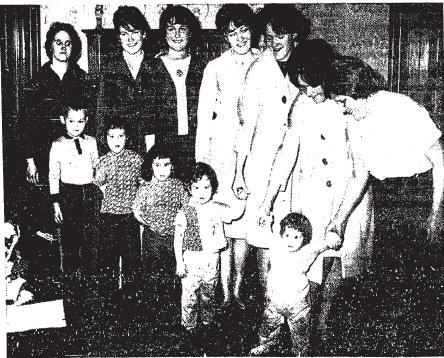
The Ten O'Neil Sisters


The O'Neil sisters, April 22, 1946.


Mrs O'Neil, daughters and grandkids, April 13, 1963.


Three O'Neil sisters return to parade with sons and daughters, April 6, 1980.


There was a time when big families were common in Boston. And when I say big, I mean twelve children, including ten girls. That was the O'Neil family of Wyman street, Jamaica Plain during the 1940s and 50s. They were a staple at the annual Easter Parade in their identical outfits, and of course were favorites of newspaper photographers and editors.


The Ten O'Neil Sisters Home Page

Wednesday, August 22, 2012

No Love For The EL

It took over forty years, but they finally got rid of the Forest Hills elevated line. There were multiple efforts to take down the elevated structure in the 1940s. In this case, a city councilor tried to use the war effort to justify his attempt. Personally, it never occurred to me during the 1960s that the El would be taken down. I looked at it as an essential service, like a water main. Of course, I didn't live under the damn thing.

The claim that the El ran parallel to the New York New Haven line was disingenuous. Roxbury and the South End have suffered from the Orange Line move west to the railroad bed, and residents have been demanding a replacement ever since. For Jamaica Plain, on the other hand, it was a great deal.


Daily Boston Globe April 14, 1942

Demolition of 'El' From Forest Hills to Broadway is Urged


Demolition of the Elevated structure from Forest Hills to Broadway, thereby making available hundreds of thousands of tons of steel for the national war effort, was recommended by the Boston City Council at yesterday's session.

City Councilor James M. Langan of Jamaica Plain, who introduced the order, pointed out that the New York, New Haven and Hartford Railroad runs almost parallel to the Boston Elevated structure from Forest Hills to the Back Bay Station and that the "L" could use the abandoned rails of this railroad, inasmuch as they are of the same gauge.

Pres. Thomas E. Linehan appointed a committee comprising Councilor Langan, Councilor Thomas J. Hannon of Dorchester, and Councilor William F. Hurley of Roxbury to confer with Mayor Tobin and officials of the El relative to the advisability of razing the El structure.

Friday, June 29, 2012

A Tree is Planted on Arbor Day

Eliot School, Arbor Day tulip tree on left (photo by Charlie Rosenberg).


The schoolboy tulip tree, shown at its full height (photo by Charlie Rosenberg).


I considered posting this entry for Arbor Day, but there would have been no leaves on the tree in April, and it seemed a shame to show the tree without its leaves. The article below describes a tree planting by boys from the Agassiz school in 1928. Mayor Nichols lived right at the Monument at the time, and sent his boys to the Agassiz. Professor Robert H. Richards lived at the corner of Eliot and Dane streets, and was the husband of Ellen Swallow Richards, chemist and first woman granted a degree from M.I.T. The article doesn't say, but Professor Richards, then retired from M.I.T., was at the time running the Eliot School. The Arnold Arboretum got involved by donating the tree in the name of their former director. Given the roles played by three institutions, the Agassiz, the Eliot school, and the Arboretum, plus a resident mayor and his sons, plus a resident member of M.I.T.'s first graduating class, it might be nice if a small plaque could be put on the tree commemorating the Arbor Day planting. That's a lot of history for one tulip tree.


Daily Boston Globe April 28, 1928


Trees Planted By Pupils Of Boston's Public Schools


To children attending Boston schools yesterday was Arbor Day. The official observance throughout the state will be today, but schools will be closed, so appropriate exercises were held yesterday.

*********************************************

In Jamaica Plain, Mayor Nichols watched his two sons, Clark and Dexter, and the sixth grade boys in the mechanic arts course of the Agassiz School plant a tulip tree in memory of Charles Sprague Sargent, late director of the Arnold Arboretum. Clark is in the fifth and Dexter in the fourth grade at the Agassiz School.

The tree, a gift of the Arboretum, was planted in front of the Eliot School on Eliot st, an annex of the Agassiz, where the boys go for their carpentry and garden work. Others who attended the planting included Mrs Nichols, Prof Robert H. Richards, formerly of the Massachusetts Institute of Technology, who allowed the tree to be planted on his grounds, now rented to the city; William H. Judd, propagator of the Arboretum, who told about its work, and Joseph Q. Litchfield, master of the Agassiz School district.

The other boys who took part in the actual planting were David Shepard, David Crew, William McDonough, George Muise and James Reynolds. John Ryan read Gov Fuller's Arbor Day proclamation and John Spence was master of ceremonies. A group of eight boys recited stanzas of "Trees of the Fragrant Forest."

Thanks for Charlie Rosenberg for the photos. You can read about Ellen Swallow Richards at the Jamaica Plain Historical Society web site.

Sunday, May 27, 2012

Walk Around The Pond - And Help the Library

Curling on Jamaica Pond, 1890s.


Saturday, June 2, from 1:00 PM to 4:00 PM, there will be a Walk Around the Pond fundraiser for the Jamaica Plain and Connolly branch libraries in Jamaica Plain. Suggested donation is $5, and registration will be at the boathouse. Come out and support the libraries that have done so much for Jamaica Plain residents over the years. Be there or be square.

Tuesday, May 15, 2012

Jamaica Towers

Perkins street and the Jamaicaway, 1905.

[Update: a reader has informed me that the correct name of the property is Jamaicaway Tower and Townhouses. Since I've known it all my life as Jamaica Towers, I'll leave my original language in the text and stand corrected in fact.]

Henry Rueter, brewer and partner in the Highland Spring Brewery at Heath and Parker streets, lived at the corner of Perkins street and the then-new Jamaicaway. Notice the other adjacent homes, each on a substantial lot, including carriage houses.


The appropriately named Jamaica Towers rises above the Emerald Necklace, providing its inhabitants wonderful views, while making a sore thumb of itself for those availing themselves of the adjacent parkland. The article transcribed below describes one minor speed bump along the way to the developers making their money and the residents gaining their views. Interesting to note was the involvement of the BRA in declaring the property as 'blighted.' Nice trick, that. Somehow, I doubt they'd get away with it today. Note below that there is no mention of Olmsted's Emerald Necklace.


Boston Globe June 12, 1964

Hearing on High-Rise Apts.

Jamaicaway Plan Stirs Row


One Jamaica Plain resident Thursday referred to a vacant piece of land along the Jamaicaway as a "glamorous dump" as he supported a plan for a high rise apartment building on the site while a neighbor termed the proposed development "a monstrosity."

The debate for and against the $7 million development at Perkins st. was focused on a Boston City Council hearing to determine whether state legislation limited building heights to 65 feet along the Jamaicaway should be accepted.

Only 65 residents attended the hearing along with some legislators, with 12 voicing support for the high rise plan and an equal number speaking against it. But both sides claimed the support of hundreds of other residents and petitions with lists of signatures were entered into the records.

The state legislation was initiated by both State Sen. James Hennigan of Jamaica Plain and State Rep. William Carey to block the luxury apartment development planned by educator and economist Arnold Soloway and several otter principals under a limited dividend corporation.

"There has been a bill of goods sold out there by the real estate people," said Carey, referring to petitions gathered by residents in support of the plan.

He had support from Sen. Hennigan who said he objected to the designation put on the vacant area by the Boston Redevelopment Authority as "blighted," and from State Rep. Charles R. Doyle of West Roxbury who declared that property values of existing homes in the area would decrease because of the high rise structure.

In sharp disagreement were State Rep. Stephen C. Davenport of Jamaica Plain and State Rep. James Kelly of Roxbury.

"It is hard to imagine a poorer piece of legislation," said Davenport, "that's a violation of home rule."

Kelly said an investment of $7 million "is good for Jamaica Plain." He declared his office is close to the location and no one has called him to say they opposed the high rise plan.

Dr Elizabeth Kleiman of 66 Perkins st. opposing the high rise, said it should be closer to the city. Atty. John J. Walsh of 15 Pondview av. urged the council to "repudiate" the plan.

Soloway said his group is contemplating a 282-unit, 29-story building which because of the sloping nature of the land area, would not be visible from adjacent areas and would not obstruct any abuttors since it occupies only six percent of the land area. He projected rentals at from $130 to $450 - the latter for four duplex penthouses. He said the firm also is considering a shuttle service for residents to downtown areas to encourage people to leave their cars at home.