Saturday, August 29, 2026

Google wants to disappear me!

 I got an email from Google saying that my Boston history blog was going to be deleted because I hadn't been there in 2 years. So I'm posting again, hoping that I won't get the same warning for this blog. 

Your Blogger

Mark. 

Wednesday, October 9, 2019

Stony Brook Redux - Pure Speculation Division


While finally getting around to reading The Scarlet Letter last week, I came upon a thought-provoking passage. Do I need a spoiler alert for a book published in 1950? I hope not. Anyway, Hester Prynne has heard that minister Arthur Dimmesdale has been to visit John Eliot at his Indian meeting place, and would be returning home by way of Roxbury (un-named in the book, I believe). She takes her daughter Pearl, and waits for him in the forest by a brook. Wait ... a brook, just past Boston Neck on the mainland? Given that Hawthorne had traveled from Boston through Roxbury to visit his one-time publisher Samuel Goodrich at his home along Centre st in Jamaica Plain, could the brook that enters the tale have possibly been inspired by our very own Stony Brook, which he had to cross by the bridge at what is now Jackson Square? Hmmm .... Just a thought. 


Image from the 1878 illustrated version: https://www.gutenberg.org/files/25344/25344-h/25344-h.htm

Thursday, April 11, 2013

A Poem for Stony Brook

I came upon this poem by Robert Frost, and thought how perfectly it described the late great Stony brook. "The brook was thrown, Deep in a sewer dungeon under stone..." Once, trout entered her waters in the Spring to mate and complete the circle of life. Now, she lies in a subterranean vault, as if the city was ashamed of her. Such is progress.


A Brook In The City

 The farmhouse lingers, though averse to square
With the new city street it has to wear
A number in. But what about the brook
That held the house as in an elbow-crook?
I ask as one who knew the brook, its strength
And impulse, having dipped a finger length
And made it leap my knuckle, having tossed
A flower to try its currents where they crossed.
The meadow grass could be cemented down
From growing under pavements of a town;
The apple trees be sent to hearth-stone flame.
Is water wood to serve a brook the same?
How else dispose of an immortal force
No longer needed? Staunch it at its source
With cinder loads dumped down? The brook was thrown
Deep in a sewer dungeon under stone
In fetid darkness still to live and run --
And all for nothing it had ever done
Except forget to go in fear perhaps.
No one would know except for ancient maps
That such a brook ran water. But I wonder
If from its being kept forever under,
The thoughts may not have risen that so keep
This new-built city from both work and sleep.

Friday, December 21, 2012

Egleston Theatre: 1939

Boston Public Library Flickr group, Leslie Jones, photographer.(click on image for larger view).


Egleston Theatre, 1924, corner of Washington and Beethoven sts.


There were three theatres in Jamaica Plain during the first half of the 20th century; the Jamaica, the Madison and the Egleston. For some reason, my parents went to the Egleston, and never mentioned the other two. Both the Egleston and the Jamaica on Centre street near Hyde Park closed in 1961. The Egleston building was torn down in 2003. 

Tuesday, November 27, 2012

Lenox Motor Car Company

Lenox Motor Car, 1911.


Lenox Car advertisement.


Lenox Motor Car Company, Washington street, 1914.


To my surprise, I've found another automobile manufacturer in Jamaica Plain.  Earlier entries have been American Napier and Farnham Nelson.  The Lenox Motor Car company was the successor to the Martell Motor Car company. There is very little available on the company, but they seem to have begun in 1911 in brick buildings erected and owned by local  real estate mogul Patrick Meehan on Washington street near the corner of Glen road (the address was that of the long building on the right above with the name Meehan across it). In 1915, they moved to Lawrence, and in doing so bankrupted themselves. The building they began in is still there today.

Source: The Lenox Motor Car Company


Thursday, August 30, 2012

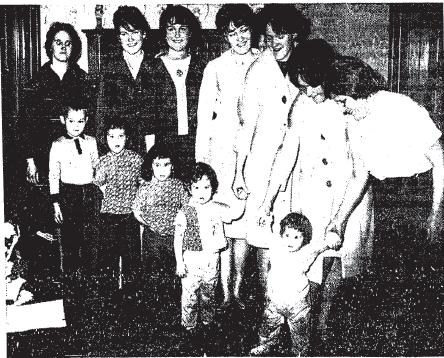
The Ten O'Neil Sisters


The O'Neil sisters, April 22, 1946.


Mrs O'Neil, daughters and grandkids, April 13, 1963.


Three O'Neil sisters return to parade with sons and daughters, April 6, 1980.


There was a time when big families were common in Boston. And when I say big, I mean twelve children, including ten girls. That was the O'Neil family of Wyman street, Jamaica Plain during the 1940s and 50s. They were a staple at the annual Easter Parade in their identical outfits, and of course were favorites of newspaper photographers and editors.


The Ten O'Neil Sisters Home Page

Wednesday, August 22, 2012

No Love For The EL

It took over forty years, but they finally got rid of the Forest Hills elevated line. There were multiple efforts to take down the elevated structure in the 1940s. In this case, a city councilor tried to use the war effort to justify his attempt. Personally, it never occurred to me during the 1960s that the El would be taken down. I looked at it as an essential service, like a water main. Of course, I didn't live under the damn thing.

The claim that the El ran parallel to the New York New Haven line was disingenuous. Roxbury and the South End have suffered from the Orange Line move west to the railroad bed, and residents have been demanding a replacement ever since. For Jamaica Plain, on the other hand, it was a great deal.


Daily Boston Globe April 14, 1942

Demolition of 'El' From Forest Hills to Broadway is Urged


Demolition of the Elevated structure from Forest Hills to Broadway, thereby making available hundreds of thousands of tons of steel for the national war effort, was recommended by the Boston City Council at yesterday's session.

City Councilor James M. Langan of Jamaica Plain, who introduced the order, pointed out that the New York, New Haven and Hartford Railroad runs almost parallel to the Boston Elevated structure from Forest Hills to the Back Bay Station and that the "L" could use the abandoned rails of this railroad, inasmuch as they are of the same gauge.

Pres. Thomas E. Linehan appointed a committee comprising Councilor Langan, Councilor Thomas J. Hannon of Dorchester, and Councilor William F. Hurley of Roxbury to confer with Mayor Tobin and officials of the El relative to the advisability of razing the El structure.

Friday, June 29, 2012

A Tree is Planted on Arbor Day

Eliot School, Arbor Day tulip tree on left (photo by Charlie Rosenberg).


The schoolboy tulip tree, shown at its full height (photo by Charlie Rosenberg).


I considered posting this entry for Arbor Day, but there would have been no leaves on the tree in April, and it seemed a shame to show the tree without its leaves. The article below describes a tree planting by boys from the Agassiz school in 1928. Mayor Nichols lived right at the Monument at the time, and sent his boys to the Agassiz. Professor Robert H. Richards lived at the corner of Eliot and Dane streets, and was the husband of Ellen Swallow Richards, chemist and first woman granted a degree from M.I.T. The article doesn't say, but Professor Richards, then retired from M.I.T., was at the time running the Eliot School. The Arnold Arboretum got involved by donating the tree in the name of their former director. Given the roles played by three institutions, the Agassiz, the Eliot school, and the Arboretum, plus a resident mayor and his sons, plus a resident member of M.I.T.'s first graduating class, it might be nice if a small plaque could be put on the tree commemorating the Arbor Day planting. That's a lot of history for one tulip tree.


Daily Boston Globe April 28, 1928


Trees Planted By Pupils Of Boston's Public Schools


To children attending Boston schools yesterday was Arbor Day. The official observance throughout the state will be today, but schools will be closed, so appropriate exercises were held yesterday.

*********************************************

In Jamaica Plain, Mayor Nichols watched his two sons, Clark and Dexter, and the sixth grade boys in the mechanic arts course of the Agassiz School plant a tulip tree in memory of Charles Sprague Sargent, late director of the Arnold Arboretum. Clark is in the fifth and Dexter in the fourth grade at the Agassiz School.

The tree, a gift of the Arboretum, was planted in front of the Eliot School on Eliot st, an annex of the Agassiz, where the boys go for their carpentry and garden work. Others who attended the planting included Mrs Nichols, Prof Robert H. Richards, formerly of the Massachusetts Institute of Technology, who allowed the tree to be planted on his grounds, now rented to the city; William H. Judd, propagator of the Arboretum, who told about its work, and Joseph Q. Litchfield, master of the Agassiz School district.

The other boys who took part in the actual planting were David Shepard, David Crew, William McDonough, George Muise and James Reynolds. John Ryan read Gov Fuller's Arbor Day proclamation and John Spence was master of ceremonies. A group of eight boys recited stanzas of "Trees of the Fragrant Forest."

Thanks for Charlie Rosenberg for the photos. You can read about Ellen Swallow Richards at the Jamaica Plain Historical Society web site.

Sunday, May 27, 2012

Walk Around The Pond - And Help the Library

Curling on Jamaica Pond, 1890s.


Saturday, June 2, from 1:00 PM to 4:00 PM, there will be a Walk Around the Pond fundraiser for the Jamaica Plain and Connolly branch libraries in Jamaica Plain. Suggested donation is $5, and registration will be at the boathouse. Come out and support the libraries that have done so much for Jamaica Plain residents over the years. Be there or be square.

Tuesday, May 15, 2012

Jamaica Towers

Perkins street and the Jamaicaway, 1905.

[Update: a reader has informed me that the correct name of the property is Jamaicaway Tower and Townhouses. Since I've known it all my life as Jamaica Towers, I'll leave my original language in the text and stand corrected in fact.]

Henry Rueter, brewer and partner in the Highland Spring Brewery at Heath and Parker streets, lived at the corner of Perkins street and the then-new Jamaicaway. Notice the other adjacent homes, each on a substantial lot, including carriage houses.


The appropriately named Jamaica Towers rises above the Emerald Necklace, providing its inhabitants wonderful views, while making a sore thumb of itself for those availing themselves of the adjacent parkland. The article transcribed below describes one minor speed bump along the way to the developers making their money and the residents gaining their views. Interesting to note was the involvement of the BRA in declaring the property as 'blighted.' Nice trick, that. Somehow, I doubt they'd get away with it today. Note below that there is no mention of Olmsted's Emerald Necklace.


Boston Globe June 12, 1964

Hearing on High-Rise Apts.

Jamaicaway Plan Stirs Row


One Jamaica Plain resident Thursday referred to a vacant piece of land along the Jamaicaway as a "glamorous dump" as he supported a plan for a high rise apartment building on the site while a neighbor termed the proposed development "a monstrosity."

The debate for and against the $7 million development at Perkins st. was focused on a Boston City Council hearing to determine whether state legislation limited building heights to 65 feet along the Jamaicaway should be accepted.

Only 65 residents attended the hearing along with some legislators, with 12 voicing support for the high rise plan and an equal number speaking against it. But both sides claimed the support of hundreds of other residents and petitions with lists of signatures were entered into the records.

The state legislation was initiated by both State Sen. James Hennigan of Jamaica Plain and State Rep. William Carey to block the luxury apartment development planned by educator and economist Arnold Soloway and several otter principals under a limited dividend corporation.

"There has been a bill of goods sold out there by the real estate people," said Carey, referring to petitions gathered by residents in support of the plan.

He had support from Sen. Hennigan who said he objected to the designation put on the vacant area by the Boston Redevelopment Authority as "blighted," and from State Rep. Charles R. Doyle of West Roxbury who declared that property values of existing homes in the area would decrease because of the high rise structure.

In sharp disagreement were State Rep. Stephen C. Davenport of Jamaica Plain and State Rep. James Kelly of Roxbury.

"It is hard to imagine a poorer piece of legislation," said Davenport, "that's a violation of home rule."

Kelly said an investment of $7 million "is good for Jamaica Plain." He declared his office is close to the location and no one has called him to say they opposed the high rise plan.

Dr Elizabeth Kleiman of 66 Perkins st. opposing the high rise, said it should be closer to the city. Atty. John J. Walsh of 15 Pondview av. urged the council to "repudiate" the plan.

Soloway said his group is contemplating a 282-unit, 29-story building which because of the sloping nature of the land area, would not be visible from adjacent areas and would not obstruct any abuttors since it occupies only six percent of the land area. He projected rentals at from $130 to $450 - the latter for four duplex penthouses. He said the firm also is considering a shuttle service for residents to downtown areas to encourage people to leave their cars at home.

Thursday, May 10, 2012

The Hodgdon House

Jamaica Pond at the top. South, Walk Hill and Back (now Morton and the Arborway) streets meet near the Dedham Turnpike and the 'J' in Jamaica Plains (sic), 1819 (BPL). The small black box at the intersection of South and Walk Hill streets is the Hodgdon house discussed below. The Turnpike tollgate is somewhere near Walk Hill street.

Abram Hodgdon was born circa 1801. He married Emily Ayers on Christmas day, 1825, and a second time to Elizabeth Holmbert in 1845. The Norfolk County Registry of Deeds holds contracts for Hodgdon to build houses, as well as a trustee's notification of property being sold off to pay his debts. In the graveyard at the back of the Unitarian church at Centre and Eliot streets, there is a monument with the inscription "Sacred to the memory of MRS EMILY, wife of Abram Hodgdon, who died April 7, 1843."

In September of 1827, Abram Hodgdon bought four acres of land sitting between 'the road to Walk hill,' 'the lower road to Dedham' (South street), and Stony river (brook), a house and a barn for $333. Further search shows that 'a barn and half a house' were on the site already in 1806. Whether this was part of the eventual 'Hodgdon house' is a matter of conjecture, but it seems reasonable that it was.


South and Walk Hill streets, 1859 (BPL). The railroad now runs through the neighborhood. The house is again shown where South and Walk Hill street meet. Back street is now called Forest Hills street where it meets South street.


The 1908 article from the Boston Globe transcribed below tells of the demolition of an old house, once owned by the above Abram Hodgdon. The house sat along South street, between what is now Forest Hills station and the State Laboratory property. The old intersection has changed dramatically since then. Going back to the Colonial era, there was no Washington street, no Hyde Park avenue and no Arborway. Near what is now Forest Hills, a crossroads of sorts was located. South street (then the lower road to Dedham), met the road to Walk hill (also known as the road to Lower Mills, on the Dorchester/Milton line) and Back street (a continuation of Roxbury's Walnut avenue).

This intersection that was home to the Hodgdon house was where South street now turns towards the Arnold Arboretum across from the Forest Hills T station. Th end of Walk Hill street that once met South street was cut off when the railroad tracks were raised on a granite-walled embankment in the 1890s. Within ten years, the Hodgdon house was demolished for an apartment complex that remained until the 1960s.


Arborway Court at South street and the Arborway, 1924. The intersection has changed, but South street still comes through, and Walk Hill street is now the very short St Ann street. The house is gone, replaced by a brick apartment complex overlooking the railroad station and the Forest Hills elevated station.


Boston Daily Globe October 18, 1908

Landmark Is Razed

Old Hodgdon House in Forest Hills Was Built About 1812

Big Apartment House on Site


The march of improvement in the Forest Hills section has made necessary the demolition of one of the old landmarks that has stood for nearly 100 years at the junction of South and Walkhill (sic) sts, and the Arborway, and was known as the old Hodgdon house.

Recently the lot of land on which it stood was purchased by New York parties and the old-fashioned dwelling is to make room for a large modern apartment house of four stories and will contain 72 apartments.

The house has been almost completely demolished. The workmen in tearing it down, found an old-fashioned carpenter's square, of wood and tin and nearly two feet in length on its longest side.

The original building, it is said, was erected about the time of the war of 1812. It is evident that there were three distinct sections to the building, built at different times.

The frame was of hewed oak and the floor boards were of clear pine, some two feet in width. Three outside walls were bricked between the studding, the bricks being laid in cement.

The nails used in the construction of the original house were hand forged, as were the larger spikes used fastening the heavy frame work,

The house was a two-story, hip roof, containing eight rooms with unfinished attics. At some time a new roof was put in place and a portion of the old roof, with the shingles on it, was found still in place.

In the old days before the railroad was constructed at the foot of the hill on which the old dwelling stood, it was an important cross roads residence.


Source: Norfolk Country Registry of Deeds, 83:219 9/22/1827 Jonathan Trull to Abram Hodgdon.

Monday, April 16, 2012

The Daniel Nason, and a Cool Carriage


This locomotive is the Daniel Nason , built in 1858 for the Boston & Providence railroad line, and now on display at the St Louis Museum of Transportation. She's a wood-fired locomotive designed by George S. Griggs and built at the Roxbury shop just north of Ruggles street, on land now home to Northeastern University. Daniel Nason himself was the Superintendent of Transportation at the Boston depot of the Boston & Providence line. If you lived in Jamaica Plain in the following years, you would have seen the Daniel Nason chugging through the community, and perhaps it would have taken you to Boston to work or shop.


This carriage was found at the back end of the Boston & Providence Roxbury repair shop in the 1890s and refurbished for display. It was reportedly imported from England, and is now in the hands of the St Louis Museum of Transportation. Is this one of the earliest railroad passenger carriages in existence? It looks like a horse carriage dropped on to rail wheels. Which would make sense, given that a horse carriage was the only model they had, and early locomotives were small, slow-moving vehicles.

I was puzzled at first by the presence of what appears to be footrests on the top front and back of the car. Would a railroad car have footrests for a driver? Then, I found this image:


Here we have a photograph of a very early locomotive and two passenger cars that are very similar to the one shown above. And this explains the footrests - people sitting on the roof!


And finally, this 1849 map fragment shows the Boston & Providence and Boston & Worcester lines crossing in the Back bay. Notice the cars - short, with three windows each. While the drawing was only intended to indicate a railroad line on the map, the artist/cartographer would have modeled his drawing on real trains, and the carriages here bear a close resemblance to the one shown above.


For more on the Roxbury locomotive works and George Griggs, master mechnic of the shop, check out this co-post on my Boston blog here.

Friday, April 6, 2012

Here Comes the Wrecking Ball

I've been asked to publicize a meeting being held to discuss the possible demolition of the New England Home for Little Wanderers building on South Huntington avenue. You can read about it in the Jamaica Plain Gazette. To add some color, I've reposted an earlier entry from this blog.


Here's another South Huntington avenue institution. The New England Home for Little Wanderers was founded in 1865, and moved to the edge of Jamaica Plain as described in this article. For some reason, this region of Roxbury/Jamaica Plain was quite popular with charitable institutions, as shown in earlier entries. I added a contemporary picture below.


Boston Daily Globe July 28, 1914


Little Wanderers' $100,000 Building New Location for Home for Destitute Children. Work on the Erection of a Flameproof Structure Has Begun.


The New England Home for Little Wanderers will sell its present location at 202 West Newton st, and has begun to erect a new structure at a cost of $100,000 between the Jamaicaway and South Huntington av, about four miles from the Public Library and near the spots now occupied by the Boston Nursery for Blind Babies and St Vincent's Hospital. The grounds will comprise about six acres.

The plan of moving has been under consideration for some months, but negotiations for the actual construction have only just been completed.

The architects of the new institution are Brainerd(sp) & Leeds. The building will be fireproof, of three stories and a basement. The ground floor will contain the great dining room for the children, the kitchen and allied features. The boiler plant will be outside the building, its roof forming a terrace.

The first floor will hold a large auditorium with a capacity of 180, suitable for conventions held in the building. There will also be administration rooms for the superintendent, matrons, directors, etc.

The second floor will provide for the occupancy of from 40 to 50 children - rather fewer than the present building, because the plan is that the outside department henceforth shall be of more importance than the actual administrative department.

About 1000 inmates pass through the institution in the course of a year, the most detailed record of them being kept after they pass from beneath the roof of the building to homes elsewhere.

The third floor will be for a playroom and a hospital. The basement will be of reinforced concrete and the material of the remainder of the building will be of antique brick with a considerable amount of stone trimmings, the whole presenting an appearance of the Colonial period. It is hoped the new building may be ready for occupancy by next Spring.

The institution was organized in Boston in May, 1865, under a charter granted by the Legislature of Massachusetts for the purpose "of rescuing children from want and shame, providing them with food and clothing, giving them instruction in mind and heart and placing them, with the consent of their parents, or guardians in Christian homes."

Homeless and destitute children are received from all parts of New England. No discrimination is made because of color, race, sex or religion.

Arthur S Johnson is president of the Home; Samuel D. Parker, treasurer, and Frederic D. Fuller, secretary. The superintendent is Rev F.H. Knight.

The Home is a private charity. It is not supported by State, city or town funds, but by legacies and contributions from churches and individuals.


January, 2008

Monday, April 2, 2012

Ye Olde Forest Hills Station


This 1908 article discusses the then-new Forest Hills elevated station. The drawing above shows an open, fenced-in ground floor. It did get closed in quite a bit more than that on the sides. Notice the water fountain in the middle of the road. And notice the style of writing in the article. It content comes out sounding like a P.R. release, but they style is very different from anything we'd read in a newspaper today. They had not yet received the cut, cut cut message, so they weren't mean with their words.


Boston Daily Globe March 23, 1908

Hope To Have work Done This Year

Building of the Elevated Station in Forest Hills Sq Has Commenced - The Platform Arrangement.


After a prolonged disagreement over the location of the Forest Hills terminal of the elevated railroad, ground has at last been broken in Forest Hills sq. and the work of putting in the foundations for the new station begun.

The abrupt termination of the elevated structure at the entrance of the square, with its big derricks overhanging the roadway, has long been an annoyance to the residents of the district, and the completion of the work is looked forward to by all.

The terminal will be located on the west side of the square, adjoining the NY, NH & H tracks, and will be 360 feet long by 70 feet wide - a much larger station than the present terminal at Dudley st. Two tracks will pass through the station, one inbound and the other outbound.

There being no loop as at Dudley st, a blind end will be used; that is, the tracks will extend beyond the station far enough for a train that has unloaded its passengers from Boston to run out and switch over to the inbound track, when it will return to the station and load passengers for Boston from an opposite platform.

Egress from the unloading platform of the station to the surface car loading platform will be by means of two stairways. Passengers arriving on surface cars and bound for Boston will alight on an opposite platform and will gain access
to the elevated loading platform by means of two moving stairways and two ordinary stairways. Both surface car platforms will be enclosed by fences as is the case now at Dudley st.

The elevated platforms will be large enough to accommodate any crowds that will have occasion to use them for some years to come, the loading platform being 30 feet wide and the unloading platform will have a width of 20 feet, while their great length of 360 feet will amply accommodate an eight-car train, as will all of the new elevated stations and those on the Washington-st subway.

The material used in the construction of the new station and that portion of the elevated structure which crosses the arborway will be reinforced concrete, and the architecture of the whole will be sufficiently ornate to be in keeping with the surroundings, the portion of the elevated structure previously mentioned being somewhat similar in design to the present railroad bridge over the arborway.

The northern end of the station, which might be called the front entrance, will be somewhat higher than the rest of the building and will be 64 feet high. In that portion of the building will be located a waiting room, toilet rooms and an office.

With the completion of this station the Dudley-st station will cease to be a terminal and become a way station, and to this end important changes are to be made there.

No definite arrangements have yet been made by the elevated officials for handling the traffic under the new conditions, but in all probability some of the surface car line which now feed Dudley-st station will be diverted to one of the new elevated stations, possibly that at Egleston Square, thus relieving the Dudley-st station of a great deal of congestion. The engineers hope, with good fortune, to be able to complete the work by the end of this year, when, with the completion of the new subway, Boston will have taken a long stride in the direction of real rapid transit.

Monday, March 26, 2012

The May House - En-Castle-ated

Detail of room in old wing of the May house.


Known as the Arborway Castle, or alternately as the house with all those fr*&%$in' Christmas lights, the May house joins the Curtis house in our parade of modified-to-the-point-of-unrecognizability Colonial houses. As is common with such articles, there is questionable information in this one. The writer states that the modern 'castle' part of the house was added to the original Colonial house in the 1800s. To be more precise, the addition was built between 1896 and 1904. It states that the house was built by a Mr Bridge. Bridge did sell the land to the Mays, but I'm not sure we can be confident that this was the original Bridge homestead. There were other houses on May's lane owned by the Mays in the late 1800s, any one of which could have been the oldest. And of course, the original house may have been torn down and replaced during the Colonial era. The Curtis house recently discussed here is dated to 1722, so it, too could be the oldest in the community.


Daily Boston Globe February 15, 1937

Jamaica Plain House Sold, Recalls Colonial History


The house of a thousand daily conjectures, strange in its location and imposing with its turreted, castle-like architectural appointments, has opened its portals and revealed an historical secret - the remnants of the Colonial home of Capt John May.

The unusual structure, located at 61 Arborway, Jamaica Plain, a short distance from Jamaica Pond on a main highway artery, has been viewed by passing motorists who wondered at its age and history.

For many years it has been tightly closed, but will now have an occupant, James M. Graham, Boston attorney, who purchased the property, known as the May and later Carter estate, from Mrs. John Emmons, Hingham, through the real estate office of the MacLellan Brothers.

In the passing of papers it was revealed that 11 "modern" rooms of the "castle" had been constructed in the 1800s, around five of the rooms of the old May house, which was built on May's lane, now May st, by a a Mr Bridge in 1650.

The first John May, master of the vessel (?), came from Mayfield in Sussex, England, and became a resident of Jamaica Plain and the ancestor of many of bear the name of May in this country. The original home was known in later years as the May House, after Capt Lemuel May, who fought in the Battle of Lexington and whose grave is in the little churchyard of the First Congregational Church on Eliot st, Jamaica Plain.

The five rooms represent what was probably the oldest house in Jamaica Plain. There were originally 47 acres on the May farm, but with the expansion of the park system about one-third of the area was taken. When part of the old house was razed incident to the erection of the present structure by Thomas W. Carter, workmen found a number of relics of Colonial years.

They included pewter spoons, buttons from the uniforms of the "Minute Men of 1775" and a number of silver coins. Spanish silver coins were plowed in the land adjacent to the house.

The old section of the property contains the original hardware of the Revolutionary period and the figures 1760 can still be seen on the fire back in the old fireplace.

Entering from the front porch there is a small, square reception hall that opens through narrow doorways into the old low-studded,irregular shaped rooms that have corner beams and wooden fittings of rich quartered oak.

The old living room with its hand-hewn ceiling beams, wainscotted sides, corner cupboard with convenient little shelves bears a distince Colonial tinge even though the woodwork has been covered with enameled paint. The old wooden coat hangers are in evidence and the beautiful hand-carved wooden staircase has a spiral carved newel post and uprights.

It is said that the house was used as a barracks durign the siege of Boston. On July 4, 1901, long after the present structure was erected, Capt Richmond P Hobson, United States Navy; Admiral Sampson and Boston Mayor Hart were entertained there.

Wednesday, March 21, 2012

Underpass Passes (Temporarily)

With the decision to tear down the Casey Overpass just announced recently, I thought this little tidbit would be of interest. While the Casey Overpass was built in the 1950s, the need for it seems to have predated the post-war years. At the time, the railroad tracks ran on a raised embankment that bridged the Arborway with multiple arches, and the Elevated line bridged the Arborway a stone's throw away as well. And streetcars ran down Washington street and through the station as well. Add automobiles, and the Arborway grade crossing must have been quite a mess.

It was natural to propose a tunnel under Washington street to help break what must have been intersection-lock at the time, but something wasn't accounted for. That would be Stony brook, carried through Forest Hills and the rest of Jamaica Plain in a buried conduit. Apparently, no one brought up this obstacle at the City council meeting discussed below, and the proposal got a temporary green light. I'll leave the wisdom of the choice recently announced to others, but it is clear that the overpass was built for a good reason, and served its purpose well for over half a century.


Daily Boston Globe August 6, 1929

Forest Hills Underpass Order is Passed for First Reading


[Discussion of the widening of Centre st in West Roxbury]


Forest Hills Underpass

The council also, at this meeting, passed for its first reading Councillor Motley's order for $350,000 for the construction of an under-pass at Forest Hills, to relieve traffic congestion on Arborway, Washington st and other nearby streets. This underpass is planned to be 40 feet wide, and, the council was told, it is estimated that it wall save the city $107,000 annually in economic value, through elimination of delays under the elevated structure at Forest Hills.

Monday, March 19, 2012

The Lady Was A Dope Thief

I didn't see any follow-up, so I assume so got away with the heist. Between 1914 and 1924, doctors could prescribe opiates, so that explains the presence of the drugs. The pharmacy was in Hyde Square, at the current location of a tattoo shop. Just goes to show that drug crimes didn't begin in the 1960s.


Boston Globe March 31, 1917

Mysterious Drug Woman Eludes Police Chase


The mysterious young woman who "cleaned up" 30 grains of morphine sulphate, 30 grains of hydrochlorate of morphine, 20 grains of cocaine, 40 grains of heroin and half an ounce of powdered opium, at the pharmacy of William A. Lynch at 380 Centre st, Jamaica Plain, Thursday afternoon, was still at large at a late hour last evening, though the police have clews that may result in an arrest. The large amount and the variety of the narcotics taken is spurring on to a thorough canvass of West Roxbury by special officers.

The young woman entered the store and said she was ill. While the clerk was trying to assist her she swept off the drug shelf. The police secured a detailed description of the young woman.

Monday, March 12, 2012

Deadly Beauty

I've recorded many deaths be drowning at Jamaica Pond, and this entry brings the numbers more up to date with the addition of nine more unfortunates. For all its beauty, Jamaica Pond is certainly the deadliest locale in Jamaica Plain.


June 27, 1930

Boy Drowned in Jamaica Pond

John W. Rock, 11, Falls In Sailing Toy Boat

Cousin, Andrew S. Molloy, Aged 9, Rescued by Peter Dignon


John W. Rock, 11, of 195 Lamartine st. Jamaica Plain, was drowned yesterday afternoon when a toy sailboat he was playing with drifted out of reach and he fell into the Jamaica Pond in an attempt to retrieve it.

The accident occurred at the Cove shore near the Children's Museum. His cousin Andrew S Molloy, 9 years old, of 1873 Columbus av fell in at the same time, but was rescued by Michael Dignon of 128 Day st Jamaica Plain.

The Rock boy's body was recovered by police using grappling irons. The child was pronounced dead at the Peter Bent Brigham Hospital.


August 21, 1930

Find Body of Man in Jamaica Pond.


The body of Henry Parker, 69, a widower, of 63 Chestnut ave, Jamaica Plain, was seen in Jamaica Pond yesterday afternoon and was removed by police.

The body was taken to the Southern Mortuary, where it remained unidentified for some time until Henry E Parker, the mans' son, visited the mortuary.


July 13, 1932

Boy, 10 Drowned in Jamaica Pond


Stepping into a hole in the bottom of Jamaica Pond while wading there yesterday afternoon with an 11-year-old companion, George F. Clearly Jr, 10, of 8 Warren sq, Jamaica Plain, sank below the surface and was drowned.

His playmate, Robert Jordan of 5 Warren sq, went to his assistance, but becoming exhausted when Clearly struggled with him, was obliged to wrest himself from the grasp of the drowning boy and make for the banking a few yards away.

Jordan told the police that he and the Cleary boy were wading with their trousers rolled up to their thighs when Cleary suddenly announced that he was going to get wet all over and marched into the water almost up to his neck.

He was jumping up and down, laughing and shouting, when he threw up his hands and sank beneath the surface. When Jordan's efforts to save his friend proved futile he began shouting for help and two men who were rowing some distance away brought their boat to the scene, while passerby on the bank ran to summon police.

One of the men in the boat stripped off his outer clothes and dived into the water. He was unable to find the body, and police, putting out in another boat, worked for five minutes with the grappling irons before Cleary was brought to the surface.

On the way to City Hospital in the police ambulance, patrolmen Frank Berringer and Joseph Chalifaux worked over the boy in an unsuccessful attempt to revive him. Hospital physicians pronounced him dead.

The boy's father, Goerge F. Cleary had just arrived home from work when news of his son's death was brought to him. He was overcome with grief and Mrs Cleary collapsed. Besides his parents, George leaves several brothers and sisters.


July 29, 1936

Drowns, Caught By Anchor Rope

Meltzer Pulled Under at Jamaica Pond

Roxbury Man's Body Found After Fishing Trip


Pulled overboard when an anchor rope looped about his arm as he was anchoring a rowboat, Abraham D. Meltzer, 60, of 108 Elm Hill av, Roxbury, drowned in Jamaica Pond yesterday afternoon.

Meltzer hired the rowboat from Nelson Curtis and rowed out on the pond to fish, about 11 o'clock in the morning. Curtis, looking out on the pond in the afternoon, became worried when he noticed Meltzer's boat motionless but apparently unoccupied. He asked William Clancy, 20 Spring Park av, Jamaica Plain, who was rowing another boat, to see if Meltzer was all right.

Held Down by Rope

Clancy reported that Meltzer was in the water, held mysteriously below the surface. Patrolmen Harry Cook and John Moylan answered Curtis' call shortly after 4 yesterday afternoon and rowed out to Meltzer's boat, seeing one end of it was apparently weighted down. They pulled on the anchor rope and brought Meltzer's body up.

The police said the boat was securely anchored and that they believed when he threw the anchor overboard the rope caught his right arm.

At City Hospital Meltzer was pronounced dead by Dr Donald Sullivan from accidental drowning. Meltzer's wife, Mary, told police her husband was subject to fainting spells.

The water is between 25 and 30 feet deep where Meltzer drowned. His steel fishing rod was still in the boat.


July 8, 1939

Police Work Fast But Man Drowns in Jamaica Pond.


In spite of the hurried rescue attempts of almost two score policemen early today, Edward F. Mahoney, 26, 40 Cranston st., Jamaica Plain, drowned after he fell or jumped from the Jamaica Pond boat landing.

The victim was in the water at the deep end of the float for only 12 minutes as police recovered his body from a boat. His wrist watch was stopped at 2:58, they said, and at 3:10 his body was on the float with the prone method of resuscitation being applied.

Police were first attracted to the scene by passing motorists who said they saw a man jump or fall into the pond. Two police cars from the Jamaica Plain division were dispatched to the landing as once and others from Roxbury followed.

A crowd of more than 100 persons gathered to watch the efforts of the police. Dr Fred W. Beering of South st., Jamaica Plain, pronounced the man dead.


Daily Boston Globe

September 11, 1939

Two Boys Find Body in Jamaica Pond.


The body of a man of more than middle age, which apparently had been in the water for many months, was found in Jamaica Pond, near the Burroughs Museum, by two 11-year-old boys yesterday afternoon.

Medical Examiner Timothy Leary said there appeared to be no evidence of foul play.

The man, about 6 feet 9 inches tall, wore a blue serge two-piece suit bearing the label of the Boston firm, blue shirt, shoes with no shoe-strings, and fine check socks held up by rubber bands.

The body was discovered by Edward Sarno, 11, of 22 Cranston st., and Thomas Goode, 11, of 28 Cranston st., Jamaica Plain.


Daily Boston Globe July 10, 1945

Mother of 2 Soldiers Drowns in Jamaica Pond.


The body of Mrs. Ruth Whelan, 48, of 102 Perkins st., Jamaica Plain, missing since Sunday, was recovered from Jamaica Pond late yesterday afternoon by police. Her husband told police at the time of her disappearance she had been upset for some time because her two sons, Lawrene J. Jr., and Robert J., were serving with the Arm in the Pacific area.


Boston Globe August 22, 1973

Jamaica Pond drowning victim still unidentified


Medical Examiner George Katsas of Southern Mortuary is seeking the identity of a man in his late 20s or 30s whose body was found in Jamaica Pond, Jamaica Plain.

Dr. Katsas said the man who drowned ws 5 feet 10 and 160 pounds with moderately long brown hair and sideburns but no moustache. The was wearing blue dungarees, a sport shirt, brown socks and tennis shoes when discovered in the cove section of the pond by two boys Sunday, July 22.


Boston Globe July 27, 1975

Jamaica Plain youth drowns in off-limits pond


Tyrone Smith was warned about the drop. He could go out to a certain point, but that was all. Tyrone, a nonswimmer, said he understood.

But he, like many others who swim in Jamaica Pond, yesterday wandered out a bit too far and he drowned.

"He couldn't swim," said his father, James Smith, of 28 Walden st., Jamaica Plain. "He went out too far, and now.... he's gone."

Tyrone, 17, who would have entered Boston English high in the fall, was walking around the edge of Jamaica Pond yesterday with two friends, Tom Perechodruk, 17, of 182 Heath st., Jamaica Plain, and Arthur Bone, 18, of 16 Shannon rd., Dorchester. The three decided to go for a swim, despite its being against regulations.

Perechodruk, the only swimmer of the three, later said he repeatedly told his friends where the drop was and warned them not to go out too far.

"I swam out, leaving Art and Tyrone behind," said Perechodruk last night. "While I was swimming around I saw Tyrone go under. I thought he was kidding around. I started to swim in when I felt Tyrone grab my legs. He didn't hang on. At this point, I knew he was beyond the ledge and wasn't kidding. I dove under after him, but didn't see him. I dove under again and again, but the water is so murky out there I just couldn't see him."

Perechodruk then called two men sitting of a bench for help. They went in, but they, too, did not find a trace of Tyrone.

Perechodruk told Bone to call the police. After they arrived, a scuba team was brought in and they found Tyrone about 30 feet offshore and 25 feet down. He was taken to Boston City Hospital, and pronounced dead there.

Despite posted signs and a general knowledge that swimming in Jamaica Pond is forbidden, "most kids figure the day is hot, why not go for a swim?" said Sgt. Joseph Regan of District 13. "That's mostly the kind of swimming that goes on out there."

"About 10 feet out there's a slight slant, then suddenly, it it just slopes," said Regan. "It drops to 20-25 feet in no time."

"He was a good boy," said Tyrone's father, his eyes red and swollen. "He was a good son and was good to his brothers and sisters.

"He loved track. He won a lot of medals out at the city races at Franklin Park. He was an athletic boy."

Monday, March 5, 2012

The End of a Commuting Era

I've often wondered when the local passenger train service to Boylston, Jamaica Plain (Green street), and Forest Hills ended. I've read somewhere that ridership had fallen off significantly by the end of World War I. I was under the assumption that my father used the Forest Hills station in my early childhood (vague memories of watching for the train from our back porch on Spalding street), but I suspected that the former two stations had been mothballed quite a bit earlier. Now I know - and I mis-remembered my father's 1960-era commute.


Daily Boston Globe July 30, 1940


Three Suburban B.& P. Stations to Close Sept. 30

Request to Abandon Boylston-St., Forest Hills, Jamaica Plain Approved


Abandonment of the Boylston st., Jamaica Plain and Forest Hills stations on the Boston and Providence stations of the Boston & Providence Railroad, effective Sept. 30, was approved yesterday by the State Department of Public Utilities at the request of the New Haven Railroad trustees, who operate the road.

The action follows a recent hearing conducted by the department, which found that the stations were not sufficiently patronized to justify operation. The three stations were among those closed July 17, 1938, by order of the United States District Court, and subsequently re-opened under order of the State Department last February.

"We are aware of the destructive possibilities of enforced continuation of passenger train stops where passengers have made little use of them or are adequately served by other means of transportation," said the commissioners, "and are strongly of the opinion that in the problem of determining the question of abandonment of passenger stations which are not well patronized consideration must be given to those stations made use of by the very substantial number of passengers to the end that the large pubic convenience may be served and requirements met."

The commissioners pointed out that other means of transportation were "reasonably available."


Monday, February 27, 2012

No Thanks to Urban Renewal for Jamaica Plain

Continuing my recent look into recent Jamaica Plain events, the story becomes depressing. As the disaster that would be the Southwest Expressway property-taking approached, Jamaica Plain residents were already up in arms over the threat of 'urban renewal.' These people had seen what urban renewal meant in Boston, and they wanted no part of it.


Boston Globe Aug.28, 1965

Renewal Foes Protest JP Plan


Urban renewal foes turned out in large numbers in Jamaica Plain Friday night to protest, often with boos and catcalls, what they regard as the malice of change.

A crowd of more than 2000 jammed the auditorium of the Mary E. Curley School, spilling out into the lobby and the street, for a sometimes tumultuous meeting that resulted in:

-- Hundreds of signatures on a petition demanding a change in state housing laws to permit a voter referendum on any urban renewal project that may be proposed for Jamaica Plain.

-- An expression of broad support for a neighborhood "cleanup, fixup program" independent of the Boston Redevelopment Authority - a plan advanced by Edward Dalton, president of the Jamaica Plain Action Committee.

"We'll have our own renewal program," said Dalton. "We don't need outsiders here in Jamaica Plain."

John Stainton, a B.R.A. planner representing Authority Director Edward Logue, and City Councilor George Foley, chairman of the City Council's Urban Renewal Committee, were interrupted repeatedly when they spoke.

Stainton told the emotion-charged crowd no large-scale demolition is contemplated for the area and the only thing under consideration was "a careful program of rehabilitation and improvement."

"But whether anyone likes it or not," Stainton said, Jamaica Plain is changing and, if you walk around the district, you'll find conditions that don't speak well for the future health of the neighborhood."

He said some property values had already declined drastically and others are being threatened.

George Foley was shouted down by cries of "you're a liar" and "you don't know nothin'" as he attempted to assure the crowd that "if you don't want urban renewal, you won't have to have it."

Foley was echoing Mayor Collins' assurances, given Friday, that there will be no urban renewal program for Jamaica Plain unless the residents of the area show strong support for it.

Several times, as Stainton and Foley pressed their points, Dalton had to take the microphone to plead with the crowd to give both men a fair hearing.

Foley himself asked his critics to "show some respect for the people who came here honestly to learn something."